


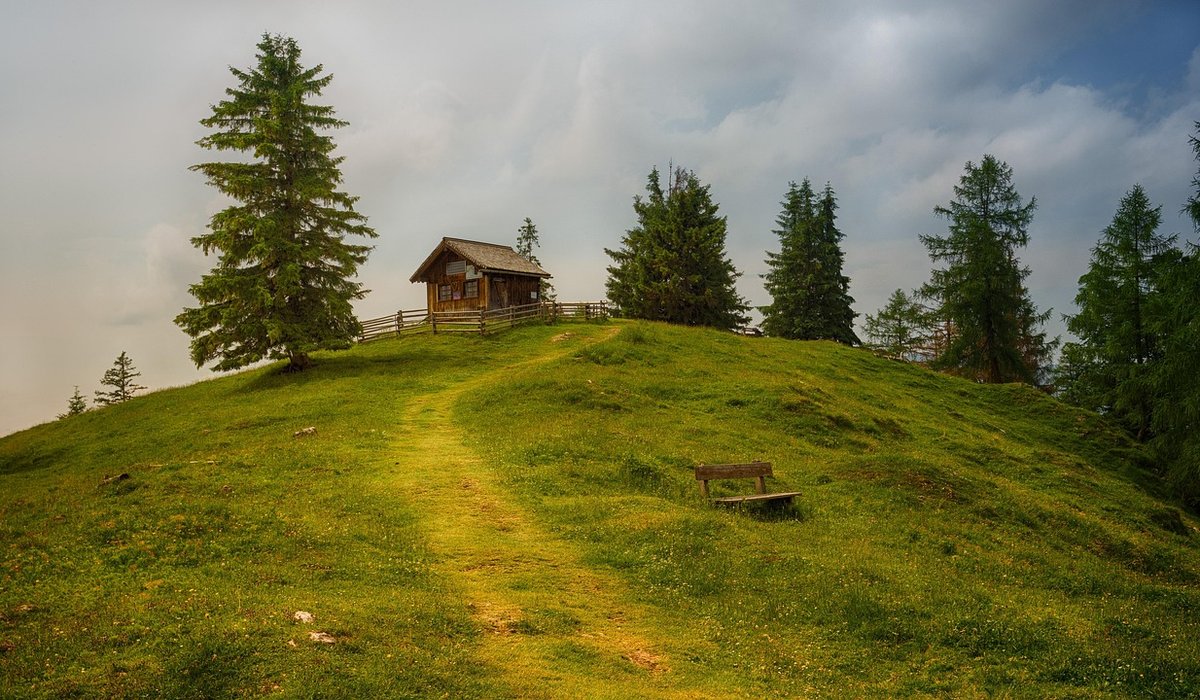
A garden cabin earns its keep by giving you somewhere to escape to — a studio, a home office, a place to sit with a coffee and watch the rain. What it should not do is hand you a list of chores every spring. Too many buyers choose on looks and price, then spend the next decade sanding, painting and patching. The good news is that low maintenance is largely a design decision made before the first post goes in the ground. Get the specification right and your cabin will quietly look after itself for twenty years or more.
Why Upkeep Costs Creep Up
British weather is hard on timber. Alternating wet and dry spells, frost, UV and wind-driven rain all take a toll, and a cheap softwood shed with a felt roof will typically need attention within two or three years. Multiply that across a couple of decades and the running costs — paint, sealant, replacement felt, labour if you would rather not do it yourself — can approach what you spent on the building in the first place.
The trick is to spend a little more upfront on materials that tolerate neglect. Think of it as buying back your weekends.
Choose Cladding That Ages Gracefully
Cladding is the single biggest factor in how much maintenance your cabin demands. The options, roughly in order of increasing ease:
- Softwood shiplap or tongue-and-groove — affordable and attractive, but needs a preservative or stain every one to two years. Fine if you enjoy the ritual.
- Western red cedar — naturally durable and dimensionally stable. Left untreated it weathers to a soft silver-grey; if you want the original colour, a light oil every few years is enough.
- Thermally modified timber — heated and steamed to change its cell structure, giving good rot resistance without chemical treatment.
- Composite cladding — a wood-plastic blend that never needs painting and simply wants an occasional wash with soapy water.
- Metal cladding — corrugated steel or standing-seam panels in a plastisol or polyester coating. Expect thirty years or more with almost no input.
Whatever you choose, fix it as a ventilated rainscreen over a breather membrane, with a 25mm cavity behind so any water that gets in can drain and dry. Use stainless steel fixings — a few pounds more now saves rusty streaks later.
Keep the Roofline Simple
Every valley, dormer and junction is a future leak. A straightforward single-pitch or gable roof sheds water reliably and is far easier to keep watertight. For covering:
- EPDM rubber — a single seamless membrane, usually guaranteed for twenty years and often good for far longer. It needs nothing beyond the odd sweep.
- Profiled metal sheet — light, quick to fit and excellent in a wet climate.
- GRP fibreglass — a seamless, hard-wearing alternative to rubber, particularly good on flatter pitches.
Give the roof a decent overhang — 300mm on the exposed sides is sensible — to throw water clear of the walls and doors. Fit proper guttering and a downpipe into a water butt or soakaway rather than letting water splash onto the base, which is where rot usually begins. Avoid mineral felt if you can: it is cheap for a reason and rarely lasts a decade.
Doors, Windows and Interior Finishes
Timber frames look lovely but want repainting. Powder-coated aluminium or uPVC windows and doors will see out the cabin. If you want a timber door, a composite or engineered version gives you the look with far less fuss.
Inside, choose surfaces that shrug off use. Luxury vinyl tile or engineered oak are both forgiving underfoot; sealed concrete or a painted moisture-resistant board works well in a workshop or studio. Avoid untreated pine and cheap laminates near doors where damp air gathers. A coat of wipe-clean eggshell on the walls will spare you repainting every year, and good ventilation — a trickle vent, an extractor or simply opening a window daily — keeps condensation and mould at bay.
Get the Base and Setting Right
Foundations are invisible and often skimped, yet they determine how long everything above lasts. A properly prepared base of paving slabs or a concrete raft, with the cabin raised on bearers to give at least 150mm of clear airflow underneath, keeps the floor dry and the timbers sound. Timber touching soil will rot, no matter how good the cladding.
Siting matters too. A cabin under a large deciduous tree will collect leaves in the gutter and sap on the roof, and will stay damp for longer. A spot with sun and a breeze dries out faster. Check drainage around the site so rainwater moves away from the base rather than pooling beside it.
A Light-Touch Routine
Even the best-specified cabin benefits from a couple of hours twice a year. Clear the gutters in autumn. Check the mastic around windows and doors before winter. Look at roof fixings and flashing. If you have timber decking, a fresh coat of oil every other year keeps it from going grey and splintering. Once you have done that, there is very little else to do — which is rather the point.
Build it well once, and your cabin becomes what it was always meant to be: a retreat, not a project.


Leave a reply