


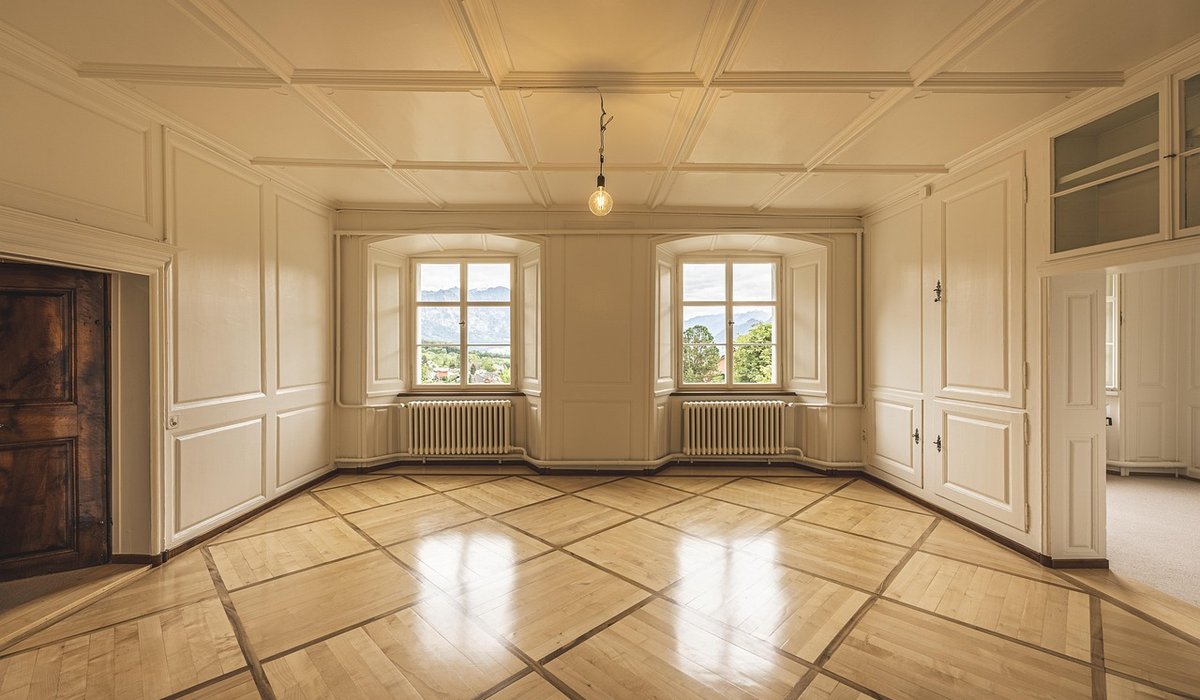
The spare room is the obvious first move
Almost every home office conversation in Britain begins in the same place: the smallest bedroom. It is already there, already heated, already wired for a lamp and a laptop. A desk under the window, a chair you actually like, a shelf for the printer, and you are working by Monday. No trench to dig for power, no base to pour, no conversation with the council.
But a spare room is rarely spare for long. Guests arrive, a child grows out of sharing, a partner starts working from home too. Before you commit, it is worth weighing the room against the alternative many British households eventually consider: a cabin at the end of the lawn.
What a spare-room office gets right
The commute is the obvious win: eleven steps from the kitchen and you are at your desk. That matters on wet mornings, when the school run runs late, and when a delivery needs signing for. You stay inside the rhythm of the house, close enough to answer the door or settle a squabble.
- No build cost beyond furniture, paint and a decent blind.
- Existing heating, lighting and broadband, already paid for.
- Quick to set up and just as quick to reverse.
- Close enough for the school pick-up and the poorly child.
Where a spare room starts to strain
The problem is rarely the desk. It is the door. A spare room sits inside the house, and households treat an inside door as an invitation. Someone will pop their head round to ask about dinner or hold a conversation two feet from your microphone. Children do not distinguish between "Mum is working" and "Mum is in the next room".
Then there is the pressure on the room itself. If it doubles as a guest bedroom, you are packing a monitor into a wardrobe whenever relatives visit. If it holds the ironing board and the Christmas decorations, you fight for space daily.
The third strain is the commute in reverse. When your desk is eight feet from the sofa, the working day has no edges. You check email at nine at night because it is right there.
Light, air and headroom
Spare rooms are usually the smallest bedroom, designed for a single bed and a chest of drawers. The window is modest, sometimes north-facing, often half-blocked by a radiator. You can improve things with a decent lamp, a light wall colour and a mirror opposite the glass, but you cannot add daylight that is not there.
A garden room is different. Because it stands alone, you can glaze more of it, position it to catch the sun and give it a higher ceiling. South-facing glazing with an overhang for summer shade gives you bright mornings and a view of the garden rather than a fence and a wheelie bin.
The garden room: separation you can walk to
The real argument for a garden office is not luxury, it is boundary. A thirty-second walk across the grass is a genuine commute: you leave the house, you arrive at work, and at the end of the day you leave again. Family members understand a building at the bottom of the garden in a way they never quite understand a closed door upstairs.
That separation cuts both ways. You will come back in for the loo, for lunch, for a parcel. In January that walk is cold and dark. You will need proper insulation, a heater, and a path you can use in the rain.
Costs, practicalities and how to choose
A spare-room conversion is inexpensive: a few hundred pounds for a desk and chair, perhaps a couple of thousand for built-in shelving, better lighting and a redecoration. A garden room is a project: base, structure, insulation, electrics run from the house, a decent door. Most single-storey rooms under 2.5 metres to the eaves fall under permitted development, but check with your local planning authority first, especially in a conservation area.
Practical points that catch people out:
- Broadband. Wi-Fi rarely reaches the end of a garden reliably. Run an armoured ethernet cable during the groundwork.
- Power. A dedicated circuit from the consumer unit with its own RCD beats an extension lead.
- Insulation and ventilation. You want to work in there in February and in July. Insulate floor and roof, and plan for shade.
- Storage. Keep the mower in a separate shed. Mixing them undoes the whole point.
If you mainly need somewhere to answer emails and stay near the family, a spare room is hard to beat. If your work needs deep concentration, regular video calls and a clean line between office and home, the walk to the bottom of the garden buys you something a bedroom cannot.


Leave a reply